

If you're a software company using Artificial Intelligence (AI) in your startup, you might assume you're eligible for R&D tax credits. After all, AI software product is cutting-edge, complex, and innovative, right?
Unfortunately, HMRC doesn’t see it that way.
In the past, getting R&D tax relief for software projects and AI development was relatively straightforward. But now, the rules are tighter, and many AI startups are seeing their claims rejected - even after receiving payouts from tax credits in previous years.
Here’s Why:
❌ Just using AI isn’t enough. If your product is powered by AI models like GPT, Anthropic, Stable Diffusion, Llama or other pre-existing frameworks, HMRC will likely argue that your software developers are applying AI, not innovating in AI.
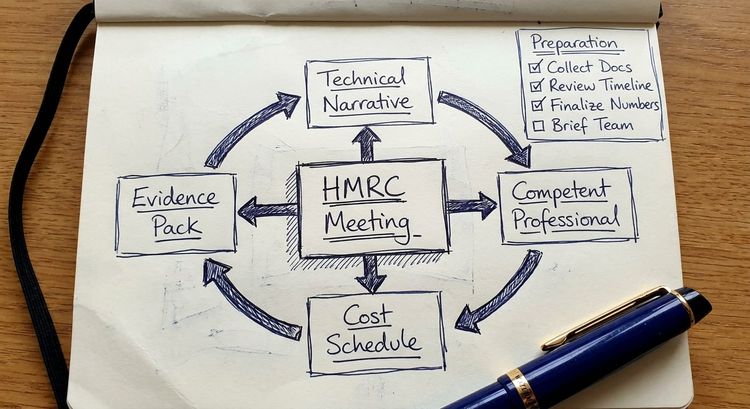
❌ Your work must solve "technological uncertainty.” If a competent professional (read: AI or software engineer) could achieve the same result using known techniques, it’s not R&D (even if it feels like innovation from a business perspective). The role of competent professionals is now crucial for R&D success, especially for software development projects.
❌ Rate of development - Barely a day goes by when there isn't some breakthrough in AI technology. You must be able to measure your technological advancement(s) against the (global) state of the art or baseline - this is especially hard in the field of AI which moves so fast!
❌ The “software trap.” Software R&D claims have come under intense scrutiny. A common mistake is that many companies assume that developing new features, using machine learning to optimise workflows, or integrating AI-powered decision-making qualifies - but HMRC often sees this as routine adaptation, not ground-breaking development. Demonstrating that a software development project advances technology involving some identifiable appreciable improvement for the entire software industry is tricky.
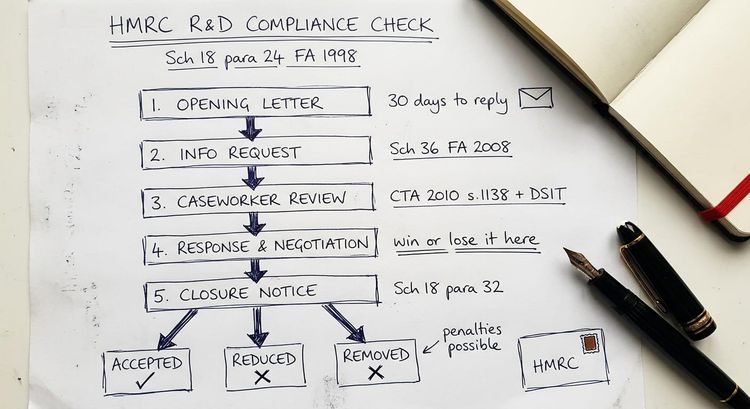
Many founders make the mistake of thinking, “If I get the money, I must have done it right.” But that’s not how it works: “Process now, check later” is HMRC’s approach—and when they do check, they’re being ruthless.
So, How Can AI Startups Actually Qualify for R&D Tax Relief?
✅ You must prove you’re advancing AI technology itself: not just leveraging AI tools in an interesting way. Your software development activities need to show an advance in science that involves overcoming one or more technical challenges.
✅ Show technical uncertainty: that means even skilled AI engineers wouldn’t have known how to achieve your results when you started due to the underlying technological uncertainty.
✅ Have in-house expertise: if all your AI development is outsourced, HMRC may argue that the “real” R&D was done elsewhere (see reference to the importance of competent professionals above, especially in the software industry).
✅ Keep detailed records: you need to document why your work was difficult and how you overcame technological uncertainty and/or technological challenges in your attempts to achieve the technological advances.
Thinking About R&D Tax Credits for Your AI Startup? Let’s Chat.
We are tax specialists who help tech founders and software businesses navigate the new R&D tax credit landscape, ensuring they file successful R&D tax credits claims while avoiding costly mistakes. If you’re unsure whether you qualify for R&D tax relief - or want to plan for a future tax relief claim - contact us.
Are you in the software sector? Have you tried to claim R&D tax credits relief for AI software development project work? What was your experience? Let’s discuss in the comments!
Photo by Solen Feyissa / Unsplash