Companies House Rectification: RP04, the SH01 Gap and What HMRC Sees
How to use RP04 to correct an SH01 at Companies House, close the cap table gap, and protect SEIS, EIS, EMI and BADR positions for UK company founders.


Sooner or later a founder opens the Companies House filing history and finds something wrong. An SH01 filed late. A statement of capital that does not add up. An allotment that was never filed at all. A class of shares listed at Companies House that the register of members does not recognise.
This article walks through the fix: the SH01 deadline, the RP04 second-filing route, when court rectification is the only answer, and why the tax consequences of leaving the gap unfixed are usually worse than the Companies House problem itself. The phrase RP04 SH01 correction Companies House describes a much wider piece of work than the form suggests.
The SH01 and the one-month deadline
Form SH01 is the return of allotment of shares required by s.555 Companies Act 2006. It must be filed within one month of the allotment, with the date, number and class of shares allotted, the consideration received, and an updated statement of capital.
Failure to file on time is an offence under s.557 Companies Act 2006. Late filings are also visible on the public register. More importantly, the SH01 is the document that ties a board minute, a subscription agreement and a share certificate to the company's externally visible capital structure.
When the SH01 is wrong (or missing) the cap table at Companies House drifts away from the company's own register of members. The register of members is the company's legal record of who owns its shares (ss.112 to 128 Companies Act 2006). Companies House holds what was filed, not the register itself. That gap is the heart of the problem.
Why HMRC can see the SH01 before they see your cap table
Companies House is public, so HMRC can check the filed allotment history before it asks for the company's own records. On a SEIS or EIS compliance statement, an EMI grant notification, an ERS annual return or an R&D enquiry, the filed allotment history is an obvious cross-check. If a SEIS1 says shares were issued on a date that does not match any SH01, or an EMI notification reports a share count that does not reconcile to the public statement of capital, expect questions before anyone reads the substance.
Where the Companies House record is clean, a HMRC enquiry that turns on cap table accuracy is far easier to answer. Where it is not, the gap becomes the first thing to explain.
RP04: the second filing route
The registrar's second-filing procedure lets a company replace a document on the register where the original was inaccurate or incomplete. The form is RP04 (Second filing of a document previously delivered).
RP04 identifies the original document being corrected (the SH01, AP01, CS01 or other prescribed form), sets out the corrected version, and is signed by a director or company secretary with a statement explaining why the original was inaccurate or incomplete.
RP04 does not remove the original document. Both filings remain on the public register. The corrected version is the operative record, but the historical mistake stays visible. That visibility is acceptable in most cases. It is not acceptable where the original was a forgery, was filed without authority or contains personal information that should not be public. For those cases the route is different (see below).
The drafting needs to be careful. The corrected SH01 must reconcile to a board minute that authorised the original allotment, the subscription agreement, the consideration received, and the updated statement of capital. If those four things do not line up, Companies House may accept the RP04 and the mismatch will then create a fresh problem on the next HMRC look.
RP04 corrects the filing. It does not cure an underlying defect in the share capital itself. A common example is the formation-default subscriber share of £1 that is never sub-divided or reduced when later allotments are made at a tiny nominal value, and is then dropped from the later statements of capital. The statements of capital understate the true issued share capital. The cause (the orphan share) has to be cured first, by sub-division or by a reduction of capital, before the filings can be made right.
When RP04 is not enough
There are three situations where RP04 alone will not fix the problem.
The allotment was never filed. If there is no original SH01, there is nothing to second-file, so you file a new SH01 out of time. The offence under s.557 is technically engaged, and Companies House will in practice accept the late return and update the statement of capital. Where the late filing affects an investor relief or an option grant, the tax position needs to be evidenced separately to HMRC.
The register of members itself is wrong. The register is maintained by the company under s.113 Companies Act 2006. If it has been kept incorrectly (allotments not recorded, transfers entered in the wrong order, classes of shares not properly described) the company can correct it internally with a written record signed by a director. Where there is a dispute about membership the court can order rectification under s.125 Companies Act 2006.
The original filing was unauthorised or fraudulent. The registrar has a narrow power to remove certain material, and the court can order rectification of the register at Companies House where the company can show the material was not validly delivered. This is rarely the route for an ordinary SH01 problem, but it matters where there are disputes between former directors, contested allotments or filings made after a change of control.
A related point sits underneath all of this. A share certificate does not by itself prove shares were validly issued. The sequence is allotment by the directors, then entry of the member in the register, with the SH01 following. If a valid earlier allotment is discovered, the SH01 is a late SH01 dated to the original allotment, not a fresh allotment dated now.
The SH01 gap and SEIS, EIS, EMI and BADR
The reason this work matters is almost never the Companies House record itself. It is the tax position attached to it.
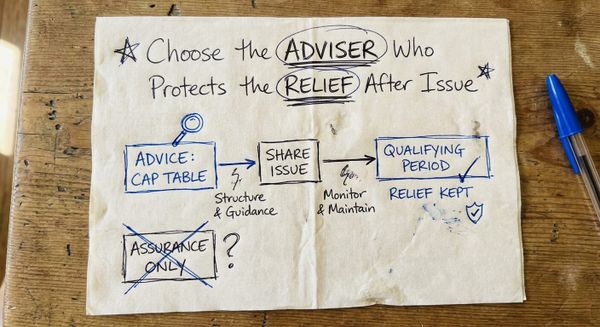
SEIS and EIS. The SEIS1 and EIS1 compliance statements report the share issue that gave rise to relief, and the share issue date and class are the trigger for the relief. HMRC's Venture Capital Reliefs (VCR) Team checks the investor claim against the company's compliance statement, so a public allotment record that does not corroborate the statement invites a query before SEIS3 or EIS3 certificates issue. This arises particularly where the founders ran the round without specialist support, and a SEIS and EIS advisory review before filing the compliance statement is the cheapest point to catch it.
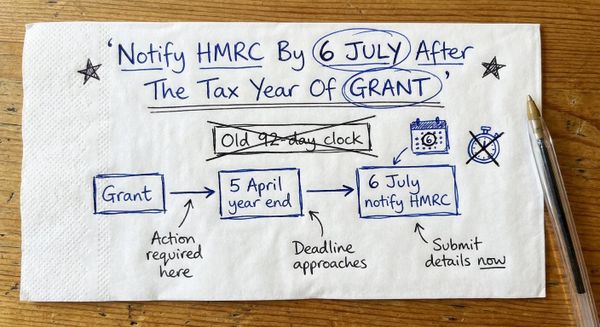
EMI. Schedule 5 ITEPA 2003 tests the company and the option against share capital, option pool and working time conditions, and caps the unexercised option value held by any one employee at £250,000. If the SH01 history understates issued share capital, the option pool calculation and that individual limit can both be misstated. For options granted on or after 6 April 2024 the notification to HMRC is due by 6 July following the end of the tax year of grant (para 44 Schedule 5 ITEPA 2003 as amended by FA 2024 s.13), so a notification made on a wrong share count carries the error from day one.
BADR. Section 169S TCGA 1992 sets the personal company test, which requires the seller to hold at least 5% of the ordinary share capital and 5% of the voting rights. Section 169I TCGA 1992 tests that condition throughout the two years ending with the disposal. Where the SH01 history does not match the register, the 5% test is harder to evidence and the relief is at risk on a future sale.
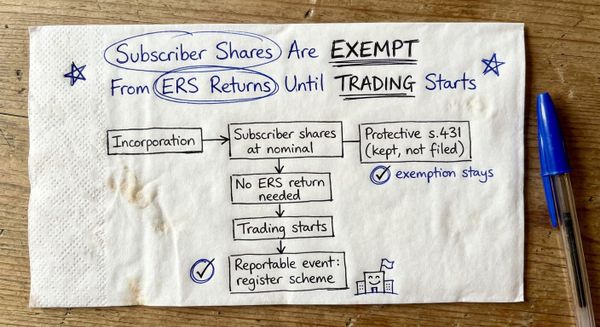
ERS reporting. Acquisitions of restricted securities and option exercises are reportable under Part 7 ITEPA 2003. The ERS annual return, due by 6 July following the tax year, relies on the same share count and class data the SH01 should have established at the date of acquisition.
Share exchanges. Where shares are exchanged on a share for share basis (s.135 TCGA 1992), the rollover depends on the shares and consideration being properly evidenced. An exchange with a misstated pre-deal cap table is exposed to challenge later.
The cap table gap is rarely fatal at Companies House. It can be costly at HMRC. The fix runs from one to the other.
A practical sequence to close the gap
A sensible order of work for a defective share record is as follows.
- reconstruct the cap table from first principles: board minutes, subscription agreements, share certificates, bank records of consideration received, prior SH01 filings, prior CS01 confirmation statements. Check the directors had authority to allot.
- update the register of members (s.113 Companies Act 2006). The register is the legal record. Until it is right, no Companies House filing will be right.
- cure any underlying share capital defect (such as an orphan subscriber share) so that the corrected filings describe a share structure that is itself sound.
- for each defective SH01, prepare and file an RP04 with the corrected version. Cross-reference the board minute and the consideration. Keep a single supporting evidence pack so the file holds together if HMRC ask.
- where an allotment was never filed at all, file the SH01 out of time.
- where the register itself is contested, take advice on applying to the court for rectification under s.125 Companies Act 2006. This is rare for ordinary housekeeping but more likely after a founder dispute.
- catch up the tax reporting. Amended ERS returns where the share data was understated. SEIS or EIS position explained to the VCR Team where dates moved. EMI notifications reviewed against the corrected share count. If a return is filed wrong, it stays wrong until you correct it. Where a compliance statement or notification was filed before the SH01 was corrected, a separate explanatory letter with the evidence pack is the safer course. The RP04 alone is not enough.
Where possible, do all of this before the SEIS1 or EIS1 compliance statement is filed, so the public statement of capital HMRC cross-checks is already accurate.
Founders, accountants and the referral point
A cap table that does not reconcile tends to surface at due diligence ahead of an investment round, or when the prior year statement of capital does not roll forward at year end. Early reassurance that Companies House problems look fixable in isolation is understandable.
The tax exposure is what changes the picture. Where the underlying company carries SEIS, EIS, EMI or BADR risk, the technical tax work is best led by a specialist, and that is where accountant firms can bring us in as the technical tax lead on the rectification.
Key takeaway
Companies House rectification is not really a Companies House problem. It is a tax records problem dressed up as a filing problem. RP04 is the second-filing route for an SH01 that was filed wrong or with the wrong statement of capital. Where no SH01 was filed the answer is a late SH01. Court rectification is the route where the register itself is contested or the filing was unauthorised. The work that matters runs from the corrected Companies House record back into the SEIS, EIS, EMI, ERS and BADR position.
If you have an SH01 you suspect was filed late or wrong, the safest single step is to reconcile the public allotment history to your register of members before any new round, grant or sale is in scope. Contact us before you file anything.
FAQs
What is RP04 used for at Companies House?
RP04 is the second-filing form. It files a corrected version of a document previously delivered to Companies House where the original was inaccurate or incomplete. A typical use is correcting a defective SH01 return of allotment, but it can apply to other prescribed forms such as director appointments and confirmation statements.
How do I correct an SH01 that was filed late or with the wrong details?
If an SH01 was filed but is wrong, file an RP04 second filing. The corrected SH01 should reconcile to the board minute that authorised the allotment, the subscription agreement, the consideration and the updated statement of capital. If no original SH01 exists, RP04 is not the route: file the SH01 out of time. Failure to file within one month is an offence under s.557 Companies Act 2006, though Companies House will in practice accept the late return.
Does an RP04 remove the original incorrect filing from the public register?
No. Both filings stay visible. The corrected version is the operative record, but the original mistake remains in the filing history. Removing material entirely is only possible in narrow circumstances, through the registrar or by court order.
What is the SH01 gap and why does it matter for tax?
The SH01 gap is the divergence between the company's register of members and the public statement of capital at Companies House. It usually arises from late or incorrect SH01 filings. It matters because HMRC can check the public filing history, and SEIS and EIS reliefs, EMI grant validity, the BADR 5% test under s.169S TCGA 1992, ERS reporting under Part 7 ITEPA 2003 and share exchanges under s.135 TCGA 1992 all rely on the share data the SH01 should have established.
When do I need a court order to rectify the Companies House register?
Court rectification is needed where the company cannot evidence that the original filing was validly delivered, where there is a dispute about a contested allotment, or where the material was unauthorised or fraudulent. For an ordinary SH01 that was filed late or with the wrong numbers, RP04 or a late SH01 is the route. Where the register of members itself is contested, the court can order rectification under s.125 Companies Act 2006.
Will HMRC accept a corrected SH01 as evidence of a SEIS, EIS or EMI position?
A corrected SH01 that reconciles to the company's contemporaneous records (board minute, subscription agreement, consideration, register of members) is good evidence. Where the SEIS1, EIS1 compliance statement or EMI notification has already been filed, the safer course is to write to the VCR Team or the Employee Share Schemes team explaining the correction with a supporting evidence pack, rather than filing the RP04 in isolation and hoping HMRC notices.
If you are working through a share record backlog (SH01 problems, missing register entries, statement of capital that will not reconcile) and there is a SEIS, EIS, EMI or BADR position attached, send us the cap table and the filing history. We will tell you what RP04, what court rectification and what HMRC correspondence the file needs. Drop us a note via our contact page.