SEIS and EIS Director Investment: Paid Directors and Connected Persons
Can a director claim SEIS or EIS? Check paid and unpaid directors, the business-angel exception, historic holdings, associates and follow-on investment.

By Steve Livingston FCA, founder of IP Tax Solutions. Technical sources reviewed: 21 September 2026.
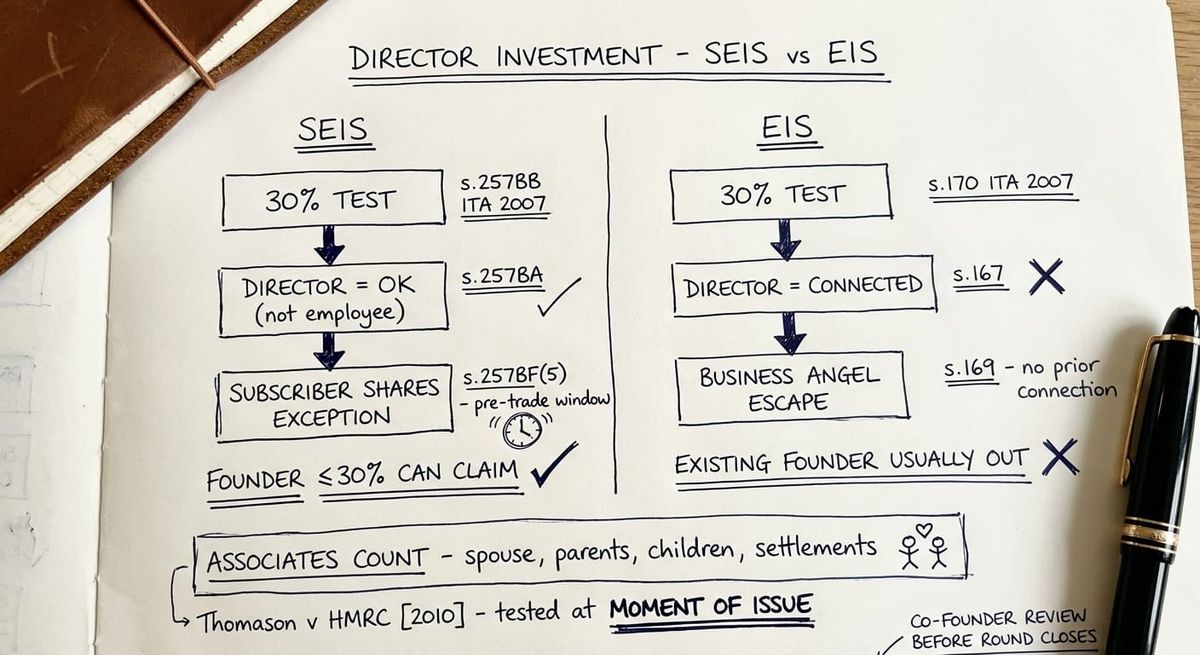
A director can potentially claim SEIS relief on an investment in their company, including where the director is paid. EIS is different: an unpaid director or one receiving only permitted payments may avoid connection, while a paid director may need the business-angel exception. In either scheme, ownership, associates and the investor's history can prevent relief.
The practical question is whether this investor qualifies for this share issue throughout the applicable statutory period. The answer cannot be established from a current cap table or a board appointment date alone.
How SEIS treats a director
The SEIS employee restriction applies to the investor and their associates during Period B, which runs from the share issue until immediately before its third anniversary. A person is not treated as an employee for this purpose at a time when they are a director of the relevant company. This can include a director receiving salary. ITA 2007 s.257BA and s.257AC.
That exception addresses employment. It does not remove the substantial-interest restriction, linked-arrangements rules or other investor conditions. A paid director with a modest holding may qualify; a director with a disqualifying historic or current interest may not.
For SEIS, the substantial-interest test runs through Period A, beginning at incorporation and ending immediately before the third anniversary of issue. Dilution immediately before an investment does not erase an earlier non-excepted substantial interest. Our SEIS connected-persons guide explains that wider ownership review.
The 30% tests and control
Under SEIS and EIS, the rules examine more than a percentage of the company's current ordinary shares. They include interests in subsidiaries, voting power, rights to acquire interests, certain asset entitlements and control. Associates' rights are attributed as required by the legislation. SEIS s.257BF and EIS s.170.
More than 30% breaches the relevant percentage tests; exactly 30% does not breach those tests merely by being 30%. But a person at or below that percentage may still fail another ownership or control limb, or another investor condition.
Associates include spouses or civil partners, ancestors, lineal descendants and business partners. Trustees and personal representatives can also count in the circumstances specified by the statute. Siblings are not associates simply because they are siblings, although a separate relationship, such as a business partnership, may matter. ITA 2007 s.253 and s.257HJ.
What the subscriber-share exception does
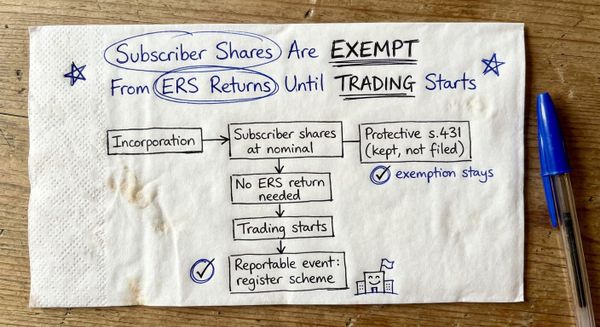
There is a limited exception for a holding while the company has issued only subscriber shares and has not begun carrying on, or preparing to carry on, any trade or business. For SEIS the provision is s.257BF(5); EIS has a corresponding rule in s.170(5).
It disregards a qualifying initial holding during that narrow period. It does not permit a founder to hold 100% after a normal SEIS investment issue and claim relief on the strength of the exception.
For example, a founder holding only the formation share before any business preparation may be within the exception at that stage. Before claiming relief on a later subscription, the founder must establish that no non-excepted substantial interest arose and that the post-issue position and remaining relevant period satisfy the rules. A trading founder who previously held 50% cannot solve that history merely by reducing to 25% just before a SEIS raise.
EIS: unpaid directors and permitted payments
EIS treats directorship as a potential connection, but s.168 excludes certain directors from that connection. It is therefore wrong to say that every existing director needs the business-angel exception.
Broadly, a director who receives no relevant payments and has no entitlement to them may fall within s.168. The statute also disregards specified payments, including qualifying expenses, commercial interest, normal distributions, market-value goods and commercial rent. A narrowly defined category of necessary and reasonable remuneration for qualifying trade or professional services is also disregarded. ITA 2007 s.168.
The services exception is not a general permission for management consultancy fees or salary. Its conditions exclude secretarial or managerial services and certain services of the kind supplied by the recipient. Payment to an associate or through another arrangement can also matter. Review entitlement as well as actual cash received.
An unpaid founder-director still needs to pass the ownership, historic connection and other investor tests. Unpaid status addresses only one potential source of connection.
EIS: the paid business-angel director exception
Section 169 can preserve eligibility where the relevant connection arises only from the investor or an associate being a director and receiving, or being entitled to receive, remuneration as such. It is a conditional exception, not a general permission for a paid founder to invest.
The statutory requirements include:
- Reasonable remuneration: the director's remuneration must meet condition A for services rendered in the director capacity, with the specified treatment of payments already disregarded under s.168.
- An original qualifying issue: condition B requires the relevant issue, or an earlier qualifying issue, to have occurred when the investor had never been connected with the company and had not previously been involved in carrying on the relevant trade, business or profession in the specified capacities.
- Follow-on timing: where the new issue does not itself meet condition B, condition C requires it to fall within the prescribed period linked to the latest qualifying original issue. A prior SEIS issue has its own relevant end date.
Read these conditions together. An earlier SEIS subscription does not independently waive the original condition-B requirement. ITA 2007 s.169.
An outside investor who subscribes before becoming a paid director may be able to use this route. Evidence should establish prior involvement, appointment, remuneration entitlement and the actual share issue. Signing paperwork after issue does not change earlier commercial facts or arrangements.
The tests continue after investment
EIS Period A generally begins two years before issue, or at incorporation if later, and ends immediately before the statutory termination date. That end date is ordinarily the third anniversary of issue, but can be later where the qualifying trade starts after issue. ITA 2007 s.159 and s.256.
For SEIS, distinguish the substantial-interest period from the shorter employee-test period described above. A later change in ownership, remuneration or employment may affect relief. Do not treat issue-day eligibility as the end of the review.
Common scenarios
A paid founder-director with 25%: SEIS may be available if there is no disqualifying history or associate interest and all other conditions are met. EIS requires separate s.168/s.169 analysis; being below 30% is not enough.
An unpaid director with no substantial interest: EIS may be possible under s.168, subject to all other investor tests. The business-angel exception is not automatically required.
Two founders who have each held 50% while trading: later dilution does not cure their historic SEIS substantial interests. EIS has a different look-back period, but it must be applied alongside the other connection rules.
An investor whose spouse is a director: the directorship alone does not make every SEIS or EIS claim fail. Establish the spouse's holdings, employment, payments and applicable exceptions.
An outside investor appointed after subscribing: this can be a valid EIS business-angel pattern, but reasonable remuneration, prior involvement and the statutory conditions still need evidence.
What to put in the review file
Prepare a dated ownership history, including options and acquisition rights; identify associates and subsidiaries; record past employment, directorships and involvement in the trade; and retain appointment and remuneration documents. For follow-on subscriptions, keep the earlier issue and relief records and calculate the relevant termination dates.
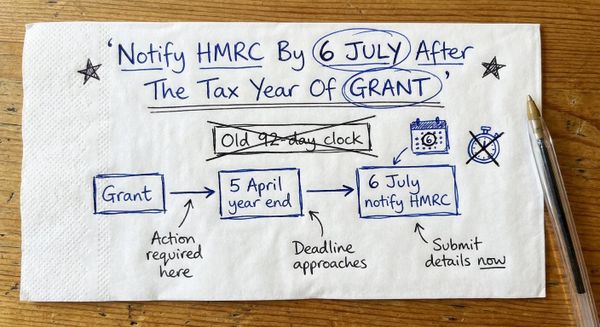
Company advance assurance does not confirm each investor's eligibility. Use our advance assurance guide for the company application, then perform this investor review separately. The SEIS1 compliance process is a subsequent company step, not a substitute for that review.
Discuss a director investment
Contact IP Tax Solutions before subscribing if you are a founder, existing director or outside investor taking a board role. Send the proposed issue date, ownership history and payment arrangements so that we can agree the scope of the review.
This article provides general information. Investor eligibility requires a separate analysis of the relevant facts and statutory periods.