How do you claim R&D tax credits?
The R&D tax credit scheme is a key driver of innovation funding amongst UK businesses. It is administered by HMRC and is claimed by companies via your company tax return. It is important that you also include the supporting documentation that HMRC expect to see...


R&D tax relief is a corporation tax relief for companies that carry out qualifying research and development. This article explains the mechanics of making a claim for accounting periods beginning on or after 1 April 2024.
For accounting periods beginning before 1 April 2024 the previous rules apply, and HMRC enquiries into those periods are still live.
Which relief are you claiming?
There are two reliefs for these periods.
- The R&D expenditure credit (the merged scheme). The credit is 20% of qualifying expenditure. It is open to trading companies of any size, other than ineligible bodies such as charities and institutions of higher education.
- Enhanced R&D intensive support (ERIS). This is for small or medium-sized companies that make a trading loss (in HMRC's published view, measured before the additional deduction) and whose relevant R&D expenditure is at least 30% of their total relevant expenditure, measured together with any connected companies. It gives an additional deduction of 86% of qualifying expenditure and a payable credit of 14.5% of the surrenderable loss.
A company cannot claim both reliefs on the same expenditure.
Do you qualify?
The detailed tests are set out in the government's Guidelines on the Meaning of Research and Development for Tax Purposes. In outline, R&D for tax purposes takes place when a project seeks to achieve an advance in science or technology. The activities that count are those that directly contribute to achieving that advance by resolving scientific or technological uncertainty.
An uncertainty exists where a competent professional working in the field could not readily work out whether something is possible, or how to achieve it in practice.
A project that does not achieve its advance, or only partly achieves it, can still be R&D.
What must be done before the claim is made?
Two steps come before the claim. If either is missed where it applies, the claim is invalid.
1. Claim notification. A company must tell HMRC in advance that it intends to claim, unless it made an R&D claim in the three years ending six months after the end of the period of account. Some earlier claims do not count, in particular a claim for a period beginning before 1 April 2023 that was made only by amending the return on or after that date. The notification must be made no later than six months after the end of the period of account. It is made through HMRC's online service. Our article on how far back you can claim covers this rule in detail. The Budget 2026 proposed changes to remove the requirement for pre-notification for claims filed from 1 April 2027.
2. The additional information form. Every claim must be supported by an additional information form, submitted online on or before the date the claim is made. It asks for the company's details, the qualifying expenditure by category and a description of the projects. For each project described it asks:
- the main field of science or technology
- what existing knowledge the project planned to improve
- what advance it aimed to achieve
- what uncertainties it faced
- how it sought to overcome them
The answers must be complete in themselves. HMRC does not accept an answer that refers to a report or other document held elsewhere. Incomplete answers can lead to the claim being rejected as invalid.
How is the claim itself made?
The claim is made in the company tax return, or by amending a return already filed. The return must include:
- the CT600
- the tax computations, which must reflect the claim
- the accounts (with an original return)
- the CT600L supplementary pages, where the company claims a payable ERIS credit or the expenditure credit
The amount of relief or credit must be quantified when the claim is made. An unquantified claim is not a valid claim.
Returns and amendments that include an R&D claim must be filed online through HMRC's Corporation Tax online service. That has applied to amendments since 8 August 2023.
Do you need a technical report?
The additional information form is the part the law requires. Most claimants also keep a fuller technical report and cost workings, so that the figures in the return and the project answers on the form can be supported if HMRC asks. This is where most of our work on a claim is done: understanding what the technical team did, testing it against the definition and recording it accurately.
How will you receive the benefit?
The expenditure credit. The credit counts as a taxable receipt of the trade. It is then used in a set order:
- against the company's corporation tax for the period
- after any notional tax deduction and a cap based on the company's PAYE and National Insurance, against corporation tax for other periods
- by surrender to another group company, if the company chooses
- against other amounts the company owes HMRC
- any balance is paid to the company
Neither the notional tax amount nor any amount above the cap is lost. The notional tax amount is set against the company's corporation tax of later periods, or surrendered to a group company, and the amount above the cap is added to the next period's credit.
ERIS. The additional deduction increases the trading loss. The company can surrender that loss for the 14.5% payable credit, which is also subject to a cap based on PAYE and National Insurance. A loss surrendered for the credit cannot also be carried forward.
Conditions on payment. Under the merged scheme, a company that was not a going concern when it claimed is not paid anything at the final step, unless it becomes a going concern within the time allowed for amending the claim. A company cannot claim ERIS (the additional deduction, the pre-trading election or the payable credit) at a time when it is not a going concern, and a claim to the payable credit is treated as never made if the company stops being a going concern before the credit is paid. HMRC also does not have to pay while the return is under enquiry, or while PAYE or NIC for the period is unpaid.
What if the return has already been filed?
A claim can be made by amending the return, provided the company is within the time limit and has met the claim notification rule. In most cases the last day for the claim is one day short of two years after the end of the period of account, because the two years begin with the last day of the period. A 31 December 2026 year end gives 30 December 2028.
Who receives the payment?
For claims made on or after 1 April 2024, HMRC will generally pay only the claimant company directly. The company supplies its own payment details on the CT600.
How long does HMRC take?
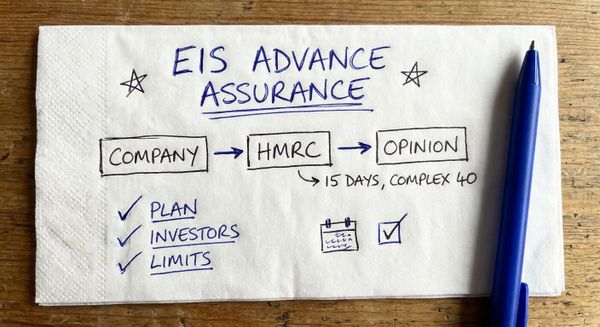
For the ERIS payable credit, HMRC's stated aim is to pay 85% of payable tax credits within 40 days, or to contact the company about the claim within 40 days. HMRC's practice note does not give a separate aim for payment of the merged scheme credit.
If you would like help with a claim, see our R&D tax relief page or contact us.