SEIS Connected Persons Rules: Employees, Directors and the 30% Test
SEIS investor eligibility explained: employee and director rules, associates, historic substantial interests, subscriber shares and why dilution may not help.

By Steve Livingston FCA, founder of IP Tax Solutions. Technical sources reviewed: 21 September 2026.
SEIS restricts relief for employees and investors with a substantial interest in the company. These are often called the connected-persons rules, although the SEIS legislation uses separate employee and substantial-interest conditions. Directors have an important employee-test exception, and associates' interests can affect the result.
The most common planning mistake is to check only the investor's percentage after the new funding round. The substantial-interest test also examines the company's earlier history. A later dilution does not erase a previous disqualifying holding.
The two SEIS tests use different periods
The employee restriction in ITA 2007 s.257BA applies during Period B, from the share issue until immediately before its third anniversary. Neither the investor nor an associate may be an employee of the issuing company or a qualifying subsidiary, subject to the director exception.
The substantial-interest restriction in s.257BB applies during Period A, from incorporation until immediately before the third anniversary of the share issue. This longer period is why historic founder holdings can prevent relief even after dilution. The period definitions are in s.257AC.
These are not the only investor conditions. Linked loans, related investment arrangements and tax-avoidance arrangements must also be considered. The company and the shares must separately qualify. Our SEIS eligibility guide provides the broader framework.
What counts as a substantial interest?
The statutory definition includes more than 30% of ordinary share capital, issued share capital or voting power, held directly or indirectly or subject to an entitlement to acquire. It also includes specified rights to more than 30% of assets available to equity holders, and control. Relevant subsidiaries are included. ITA 2007 s.257BF.
The investor's associates' rights and powers are attributed under the rules. Future rights can count, so options, conversion rights and agreements to acquire shares deserve attention alongside the current share register. A nominee does not remove the need to examine the investor's underlying interest.
Exactly 30% is not more than 30%. However, an investor with 30% of ordinary shares may still have a disqualifying voting, asset or control position. Equally, a current 20% holding does not establish eligibility if a non-excepted 40% holding existed earlier in Period A.
Who is an associate?
The definition includes the investor's spouse or civil partner, ancestors, lineal descendants and business partners. It also includes trustees or personal representatives in the specific settlement, share-interest and estate circumstances set out in the legislation. ITA 2007 s.253, applied to SEIS by s.257HJ.
Trusts need particular care. The rules include settlements where the investor or a relative, living or dead, is or was settlor, and a separate limb where the person has an interest in company shares or obligations subject to a trust or forming part of an estate. It is not sufficient to ask only whether the investor is named as a beneficiary.
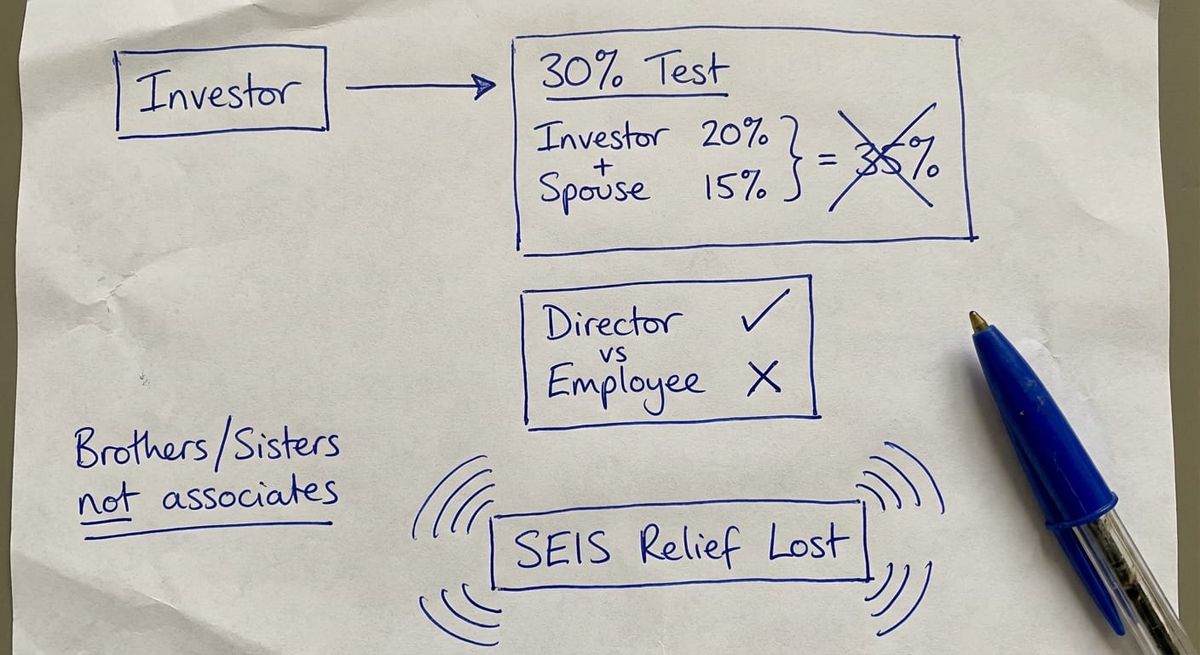
Brothers and sisters are not associates merely because they are siblings. They may nevertheless count through another relationship, such as a business partnership. Similarly, two co-founders are not automatically business partners for this purpose solely because they own shares in the same limited company; establish their actual relationships and arrangements.
For example, an investor holding 20% and a spouse holding 15% ordinarily have an aggregated 35% holding for the relevant test. Separate subscription documents do not prevent that aggregation.
The limited subscriber-share exception
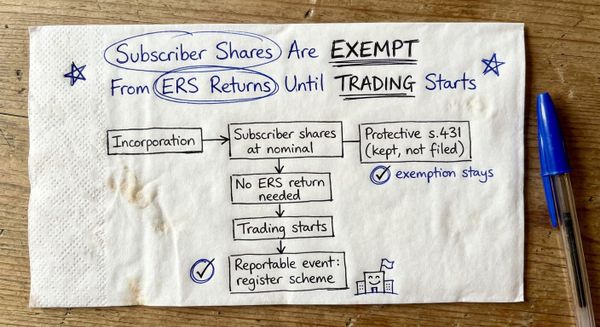
Section 257BF(5) disregards a holding in the specified circumstances while the company has issued only subscriber shares and has not begun carrying on, or preparing to carry on, a trade or business.
This can protect a formation-stage holding during that narrow period. It does not permit a founder to retain a disqualifying interest after a normal investment issue. Nor does it disregard a later period in which the founder owns most of a trading company.
The timeline matters. Identify when the first non-subscriber shares were issued and when business preparation began. Do not assume that “we had not invoiced anyone” means no preparations to trade had started.
Can employees and directors invest?
An ordinary employee, or an investor whose associate is an ordinary employee of the relevant company, can be caught during Period B. The director exception means that a person is not treated as an employee for this test while they are a director of that company. A director can therefore receive salary without the employment limb alone preventing SEIS relief. ITA 2007 s.257BA.
“Director” uses the statutory definition and is not limited to the label on a job description. The definition can include people occupying the position of director, people whose instructions directors habitually follow and certain managers with the prescribed ownership or control interests. Apply the actual definition rather than treating a senior title as sufficient. CTA 2010 s.452.
A genuine directorship or an employment ending before Period B may change the employment analysis. Neither action cures historic substantial interest or another investor condition. Continuing associate employment and any pre-existing arrangements also need checking.
EIS has different employee and director rules, including exclusions for some unpaid or permitted-payment directors and a conditional paid business-angel exception. Read the separate director investment comparison rather than applying the SEIS exception to an EIS subscription.
Can dilution solve the problem?
If a founder already had a non-excepted substantial interest during SEIS Period A, reducing the stake before the new issue does not remove that history. The new subscription cannot be made eligible simply by producing a post-money cap table below 30%.
Planning can help where it takes place before a breach and the transactions genuinely satisfy all the rules. But a share transfer, nominee or temporary ownership arrangement should not be assumed to cure a failed condition. Review beneficial ownership, future entitlements, associates and arrangements throughout the relevant period.
Where one investor cannot qualify, other investors in the round may still qualify if they meet their own conditions and the company and shares qualify. Keep that investor-level conclusion separate from company eligibility.
What happens after a breach?
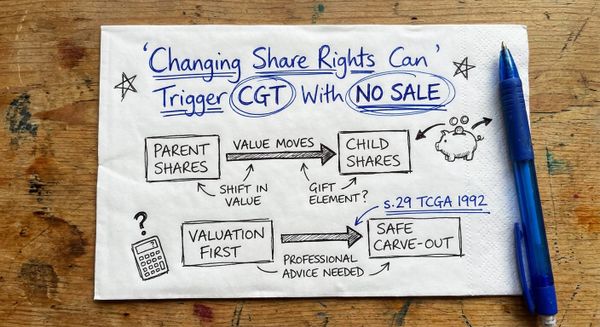
A failure within the relevant statutory period may mean relief is unavailable or must be withdrawn. Consequences for income tax and capital gains need separate calculation, as do notification duties and any assessment and interest position. There is no universal rule that interest always starts on the date an investor submitted the original claim.
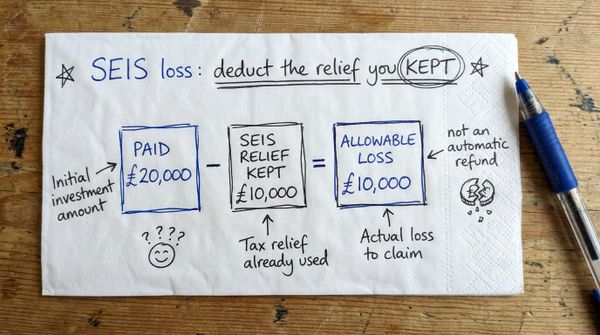
Do not assume a failed income tax claim means no other tax treatment is relevant. The SEIS capital gains guide and loss-relief guide distinguish the different reliefs and their conditions.
Advance assurance does not approve the investor
HMRC's company advance assurance service does not confirm individual investor eligibility. An application can usefully expose cap-table or company-independence issues, but the investor review remains separate. A concern about company control must not be confused with an investor's substantial-interest restriction. VCM60210.
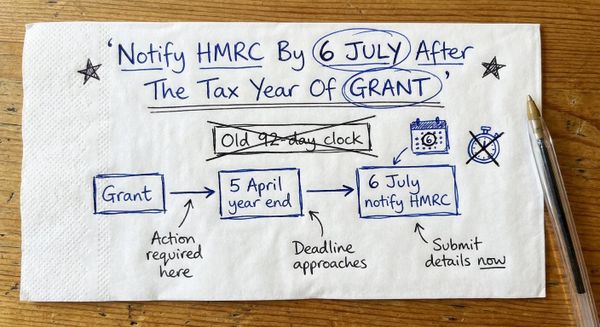
After investment, the company submits SEIS1 and seeks HMRC authority to issue SEIS3 certificates. A certificate supports an investor's claim; it does not dispense with that investor meeting the conditions. See our SEIS1 guide and advance assurance application guide.
A practical review before subscription
Collect the share register and cap tables from incorporation, articles and investor agreements, details of options and conversion rights, the subsidiary history and each investor's relevant employment, directorship and associate relationships. Plot changes against Period A and Period B rather than checking one date.
Revisit the position before later share acquisitions, option exercises, new employment or changes in control. Continuing conditions need continuing attention.
Frequently asked questions
Can a paid director claim SEIS relief?
Potentially. The director exception can address the employment restriction, but historic substantial interest, associates and all other conditions still matter.
Can a founder reduce from 50% to 25% and then qualify?
Not if the earlier 50% was a non-excepted substantial interest within Period A. Dilution does not erase it.
Does a spouse's holding count?
Yes, the spouse is an associate. Review the combined interests and other relevant rights, not just the proposed investor's registered shareholding.
Discuss investor eligibility
Contact IP Tax Solutions for a review before the shares are issued or if an existing investor's eligibility has been challenged. We will need the ownership history and relevant relationships as well as the proposed subscription.
This article provides general information. It is not a complete statement of every investor condition or advice on a particular claim.